
gorilla trekking in rwanda
Updated: Sep 25
I’ve sipped champagne aboard the Orient Express, floated over Cappadocia in a hot air balloon and enjoyed more than my fair share of luxury travel experiences. But every now and then, a bucket-list adventure comes along that leaves you sweaty, dirty, shivering on a mountainside and yet somehow still blown away.
Gorilla trekking in Rwanda was one of those.
For years, I dreamed of venturing into the misty mountains of Volcanoes National Park in search of mountain gorillas in their natural habitat. I’d imagined walking through the forest, the air thick with anticipation, before coming face-to-face with one of the world’s most extraordinary creatures. What I hadn’t pictured was the amount of effort it would require getting there.
For my dad and me, the day began with a 5am alarm that felt slightly offensive. By 6am, we were tucking into a hearty breakfast at Kinigi Cottage before our driver arrived promptly at 6:30am.
The journey to Kinigi Park Headquarters took just 10 minutes. There, we went through security, had our permits validated and used the facilities before the briefing began.

There was a little extra buzz in the air, as Rwanda’s Prime Minister, Dr. Justin Nsengiyumva, was also visiting the gorillas that day, accompanied by his own group and a bodyguard.
Around 7am, we were divided into groups of eight, supposedly based on fitness levels and hiking ability. Despite my 75-year-old dad requesting an "easier" trek, we knew we were in trouble when the other six members of our group turned out to be German.
We were introduced to our ranger, Ignace, and assigned to the Pablo gorillas. The family is named after Pablo, an orphaned infant gorilla who famously climbed on and interacted with Sir David Attenborough during the filming of Life on Earth in 1979 (episode 12). The family’s more recent story is explored in the Netflix documentary A Gorilla Story: Told by David Attenborough, which premiered in April 2026.
Known for roaming the higher slopes of Mount Karisimbi, the Pablo family consisted of around 25 gorillas at the time of our visit.
Group allocations wrapped up around 8am, at which point we climbed back into the vehicle for a 40-minute, bumpy drive to a village that appeared to be in the middle of nowhere.

We were given walking sticks and the option of hiring a porter. The porter cost $10 (plus tip) and was worth every cent. Not only did the money provide financial support to local community members living near the park, but our porter was also incredibly useful throughout the trek. He carried my dad's heavy backpack and helped us both navigate steep terrain, pushing or pulling us when needed.
At 8:50am, after our guide made contact with the trackers, we began walking through the surrounding farmland in the direction of the park entrance.
It was uphill from the very beginning. The path was littered with loose stones and boulders, and the thin air at altitude made breathing difficult. The Germans, naturally, had no issues.

After around an hour, we reached the perimeter of Volcanoes National Park. Getting inside involved scaling a rock wall, which was a fairly effective reminder that part two of the trek was not going to be a leisurely stroll through the woods.
Once inside the jungle, we spent another 30 minutes fighting our way through dense vegetation. Thick bushes, sharp brambles, slippery undergrowth and tangled vines seemed determined to make our progress as complicated as possible. There was no clearly defined trail, so Ignace used a machete to hack a rough path.
The exertion was real. The terrain was unforgiving. We were sweating. And the thicket and tangles had a personal vendetta against keeping our shoelaces tied. Every step required concentration, and there was no shortage of obstacles to navigate.

Eventually, we met up with the trackers and were instructed to leave our walking sticks behind, as they could potentially frighten the apes. We also left our bags nearby in case they contained food. Face masks were handed out to help prevent the transmission of illnesses between humans and gorillas.
The final stretch was a mix of anticipation, exhaustion and trying not to get caught on every thorn in our path.
At 10:22am, we found the gorillas.

Once we were standing in the presence of the Pablo family, all of the effort it had taken to get there was instantly forgotten. We had exactly one hour to observe the gorillas, during which I counted 14 members of the family (inclusive of two juveniles and two silverbacks).
There was something both humbling and hilarious about watching the gorillas go about their daily lives. They burped, sneezed, passed gas, snored, played and even smiled. Despite their extraordinary size and strength, it was easy to spot the similarities between us. Afterall, humans and gorillas do share approximately 98.3% of their genetic makeup.

The silverbacks were mesmerising, the juveniles were playful and curious, while the rest of the adults mostly just slept in a pile.

The gorillas occasionally acknowledged our presence with a brief moment of eye contact, before returning to whatever was occupying their attention.

Of course, no wildlife encounter would be complete without a little drama.
Just as our hour was coming to an end, two female gorillas suddenly charged toward us. The trackers immediately ushered us humans back a few feet and began making low grunting noises to communicate that we were friends, not a threat. It was a momentarily terrifying and a stark reminder that, however magical the experience was, these were still wild animals, and we were in their home.
The temperature was around 65°F, which might not sound particularly chilly, but after the excertion of getting up the mountain, trying to stand as still as possible for an hour and the adrenaline rush from the lunging gorillas, I was shivering by the time our visit came to an end. Part of me didn’t want to say goodbye, but the other half was ready to get moving again.
At 11:30am, we began making our way out of the park, but the jungle wasn’t quite ready to let us go. It took 15 minutes of battling our way through it. We ducked beneath low-hanging branches, pushed through walls of thicket and picked our way over the uneven ground. Vines caught our ankles, while thorns snagged our clothes and boughs slapped us in the face.
Then came another hour of what can best be described as sliding down the farmland. Going uphill had been challenging, but descending on loose stones and uneven ground presented its own set of problems. Every step required concentration, balance and the occasional silent negotiation with our knees.
We then had a 50-minute drive back to the lodge, where the staff disappeared with our boots, only to return them later, cleaner than when we bought them.
It was time for nourishment, a hot shower and the maximum allowable dosage of painkillers.
I never expected the gorilla experience in Rwanda to be the easiest item on my travel list. I knew there was no guarantee that the trek would be simple, that the weather would cooperate nor that the gorillas would appear exactly when we wanted them to. But what followed was a privilege that no photograph, documentary nor daydream fully prepared me for. Somewhere between the dirt, the mountains, the exhaustion, the attacking gorillas and the post-trek painkillers, the Pablo family found a permanent place in my heart.
WHAT TO WEAR/PACK:
Gorilla trekking is not the time to prioritize looking stylish over being practical. Wear neutral colors like khaki, olive or brown; avoid bright colors and camouflage.
Wear (all of which you shouldn't mind getting dirty):
Underwear (sports bra, ladies)
High socks
Hiking pants (tucked into socks or worn with gaiters to keep creepy-crawlies out)
Long-sleeved tops and layers
High, waterproof hiking boots (ideally covering your ankles)
Pack (in your waterproof daypack):
Mobile phone
Back-up mobile charger
Camera and gear
Raincoat
Hair clip/tie
Water bottle
Gardening gloves (to protect your hands from thorns)
Face mask (they will provide this if you don't want to bring your own)
Sunscreen
Sunglasses
Wet wipes
Tissues
Snacks
Insect repellent and bite treatment
Chapstick
First aid kit
Passport
KNOW BEFORE YOU GO:
Permits: There are only 96 permits available each day in Rwanda. It is highly recommended to book in advance, either online or via a reputable tour operator.
Costs: At the time of writing, the permit was $1500 per person per day (discounts are available for Rwandan and East African residents). A portion of this revenue is directed toward local communities, to build schools and health centers and roads. There is also a compensation fund for local farmers should any gorillas damage their crops, which helps to ensure peaceful co-existence.
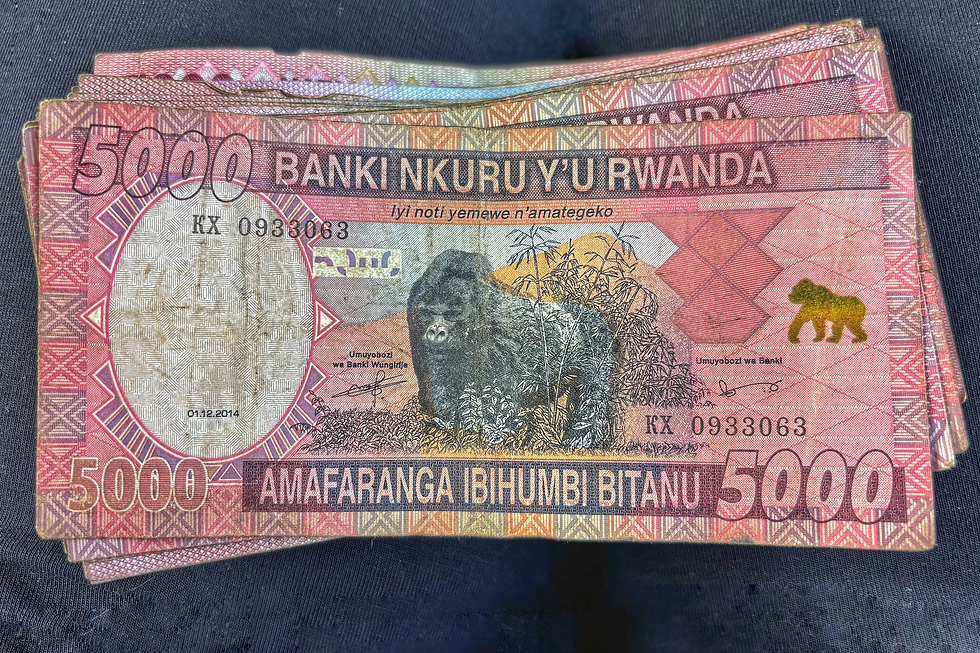
Age: Minimum age limit is 15 years old.
Passport: You should bring your passport, or confirm whether a copy will be accepted, as identification will be required when your permit is checked at the park headquarters.
Duration: Treks typically last between 30 minutes and five hours, depending on where your gorilla family is resting.
Distance: Try to stay 7-10 meters away from gorillas.
Eye Contact: Avoid direct eye contact with the dominant silverback.


Comments